
Entrepreneurship Center Management Certification Virtual Bundle
Advance Your Skills in Entrepreneurship Support
The Entrepreneurship Center Management (ECM) Certificate Program is InBIA's comprehensive, practitioner-focused training designed for leaders and staff of incubators, accelerators, entrepreneurship centers, and ecosystem-building organizations.
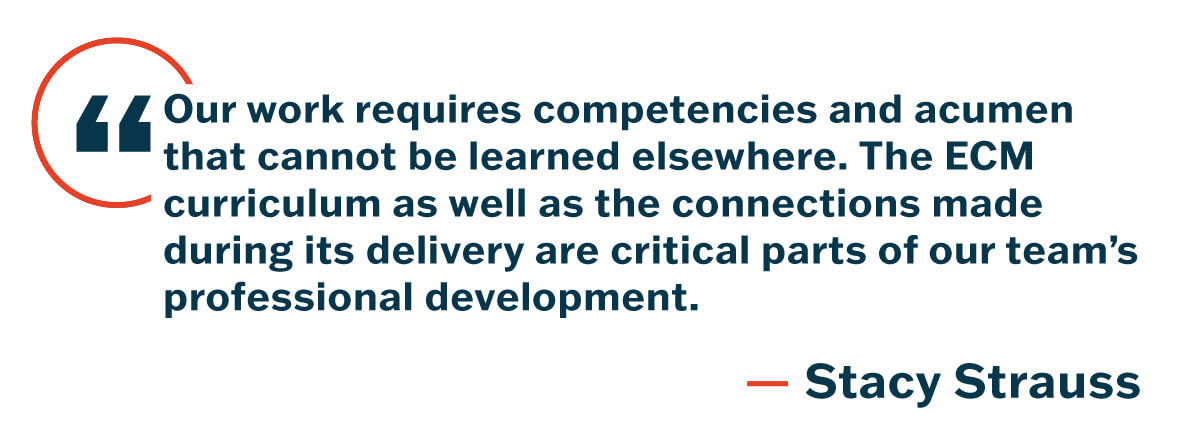
Delivered as a four-course series, the program provides a practical, end-to-end understanding of how to design, operate, and sustain high-impact entrepreneur support organizations (ESOs).
Participants move from understanding entrepreneurship ecosystems and community roles, to building effective programs for entrepreneurs, to mastering financial sustainability and operations, and finally to establishing strong governance, policies, and performance measurement systems. Together, the four courses equip participants with the frameworks, tools, and real-world insights needed to strengthen their ESO's effectiveness and long-term impact, as well as their own professional skills and credibility.
Participants who register for the full ECM program save money by bundling courses, gain access to special benefits, and move through a structured learning experience that builds progressively. They have access to course materials, assignments, and online discussions through InBIA's I-Connect platform and will receive an official ECM Certificate upon completion of the program.
The first course in the program discusses the role entrepreneurship centers play in their local/regional ecosystems. The content focuses on interconnected networks and factors that support and drive entrepreneurial success, including:
- The roles of stakeholders
- Funding mechanisms
- Policy impact
- Innovation
- Collaboration
- Global perspectives
Learn how to navigate this complex landscape to thrive as an ECM and contribute to fostering innovation and economic growth.
Course One also explores how entrepreneurship center managers and staff can take advantage of a wide variety of programs and tools in their efforts to support successful entrepreneurial ventures. From hackathons to seed accelerators, attendees will discover how to best leverage these programmes to the benefit of the entrepreneurs they support.
In the second course of the program, attendees will learn successful strategies for supporting entrepreneurs in their startup journeys.
Instructors will explain the different stages of development and growth and help attendees understand how they can align their services and support across the entrepreneurial journey.
This course also introduces participants to value-added services and the key activities with which managers can create dynamic programs via training, events, mentoring, advisory services and more.
Entrepreneurship centers demonstrate a wide range of business models. Some are able to generate revenue through community services, whereas others are more limited. In this section, we examine the range of revenue-generating options for ECM professionals, including:
- Rents and fees
- Sponsorships
- Grants
- Projects
- and more
Attracting and retaining quality leadership and support staff is a key part of an entrepreneurship center’s success. The second half of course three examines the key staffing decisions EC managers and organizers must make. Attendees will also discuss how to implement an effective succession strategy.
Entrepreneurship centers are most effective when they have clearly defined policies on who they serve and how they provide those services. This course examines several of these key policy areas, including:
- Board structure
- Recruitment
- Intake policies
- Graduation
The ECM program concludes with a look at how entrepreneurship centers can track and evaluate their impact. This session looks at the key metrics that define a program’s success, and considers how a manager can create and track a meaningful set of key performance indicators, or KPIs.
Through the ECM program, participants will learn how to:
- Understand and apply entrepreneurship ecosystem concepts and clarify an ESO's role in the community
- Identify, engage, and collaborate with key stakeholders, partners, and ecosystem actors
- Design programs and services that align with entrepreneur needs and growth stages
- Build sustainable business models using earned revenue, sponsorships, grants, and partnerships
- Manage finances, pricing, staffing, and operations to support long-term viability
- Establish effective governance structures, policies, and board relationships
- Implement clear recruitment, intake, graduation, and alumni engagement processes
- Measure outcomes, track KPIs, and communicate impact to funders and stakeholders
This program is ideal for ESO directors and staff, incubator and accelerator managers, ecosystem builders, economic development professionals, and university- or community-based program leaders seeking a practical, globally informed foundation in managing an ESO.
For More Information: